
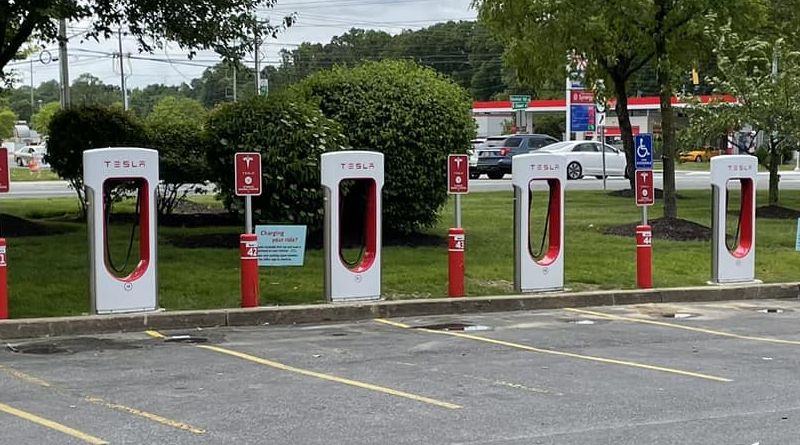
New Castle County officials gathered at Delcastle Park on Wednesday to mark the installation of a new set of electric-vehicle chargers, continuing the county’s expansion of charging infrastructure.
The county’s announcement comes as Delaware is implementing new fees for electric and hybrid vehicles. Under changes made by the Delaware Division of Motor Vehicles, EV owners now pay an annual registration surcharge designed to replace declining gasoline-tax revenue. State officials say the additional fee ensures that all vehicle owners contribute to road maintenance costs as fuel consumption patterns change. The move follows earlier debates surrounding the state’s long-term approach to emissions standards and zero-emission vehicle regulations, signaling an ongoing reassessment of Delaware’s EV strategy.
These local developments unfold against a shifting national backdrop. Since returning to office, President Donald Trump has reversed several federal initiatives intended to accelerate the transition to electric vehicles. The administration’s recently enacted legislative package, described by officials as a “big beautiful bill,” reduces EV-related incentives, cuts funding for charging-infrastructure programs, and rolls back federal emissions and fuel-efficiency standards established under prior law. Those changes were underscored during a meeting Trump held with major automakers this week, where he outlined plans to lower fleetwide efficiency targets from levels set by the previous administration. Auto executives at the meeting welcomed the regulatory shift, noting that it would enable a broader focus on gasoline-powered and hybrid vehicles.
Industry data shows the impact of these federal actions is being closely watched. Electric-vehicle sales in the United States reached record levels in 2024, but analysts report that the expiration of federal tax credits and relaxed regulatory pressure have produced signs of slowing demand. Some manufacturers have reported significant year-over-year drops in EV sales in recent month.
The combined effect leaves Delaware and its counties operating in a policy environment that no longer aligns neatly with federal priorities. New Castle County continues building chargers using previously awarded federal grant funding. The state is adjusting its fee structure to address the fiscal implications of EV adoption. The federal government is moving in the opposite direction, easing requirements and reducing EV-related spending. As a result, county, state and federal actions now point in distinctly different directions.
The county’s project is part of the “100 EV Plugs Plan,” launched in 2023, which set out to install more than one hundred charging stations across public sites. With the latest additions, the county reports that 72 chargers are active, with another six installed and awaiting activation, bringing the total to 78 once they come online.